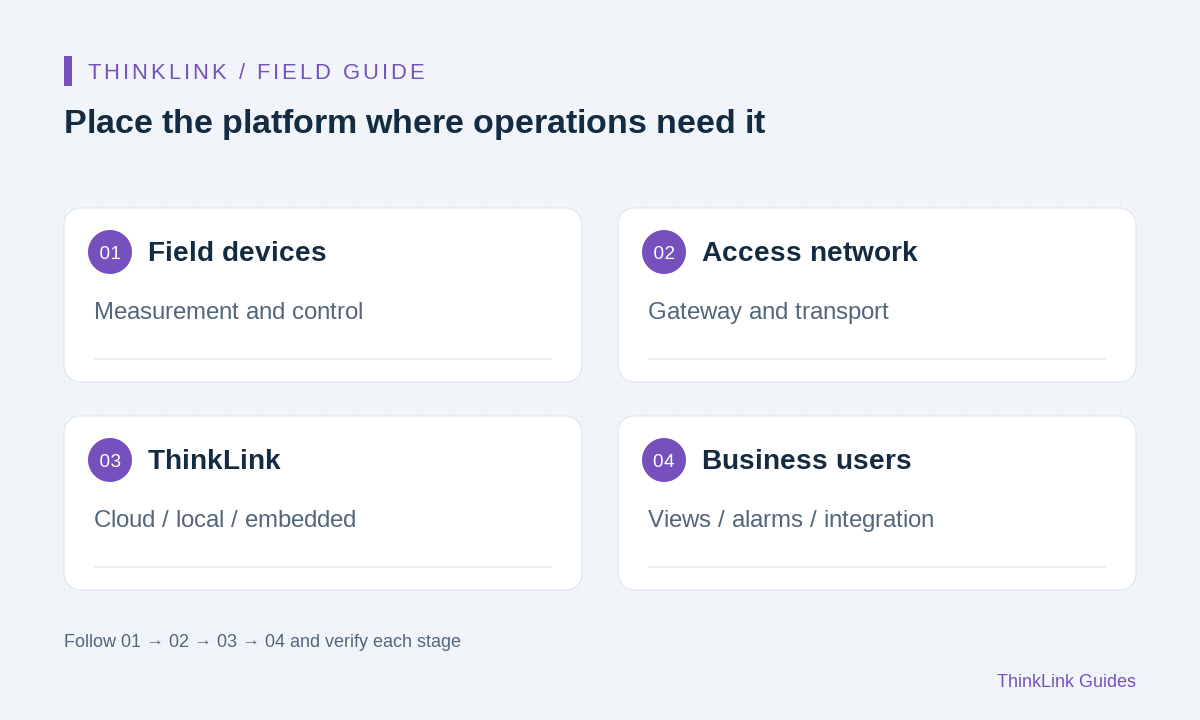
Choosing a ThinkLink deployment: cloud, local server or gateway
Choose a ThinkLink deployment based on connectivity, data location and maintenance responsibilities, with preparation, acceptance and migration checks.
Read the guideTHINKLINK / FIELD NOTES
From your first device to a maintainable application.
Practical answers to deployment, connectivity and operations.
A complete path to production
Diagrams / Decisions / Acceptance checks
Choose a ThinkLink deployment based on connectivity, data location and maintenance responsibilities, with preparation, acceptance and migration checks.
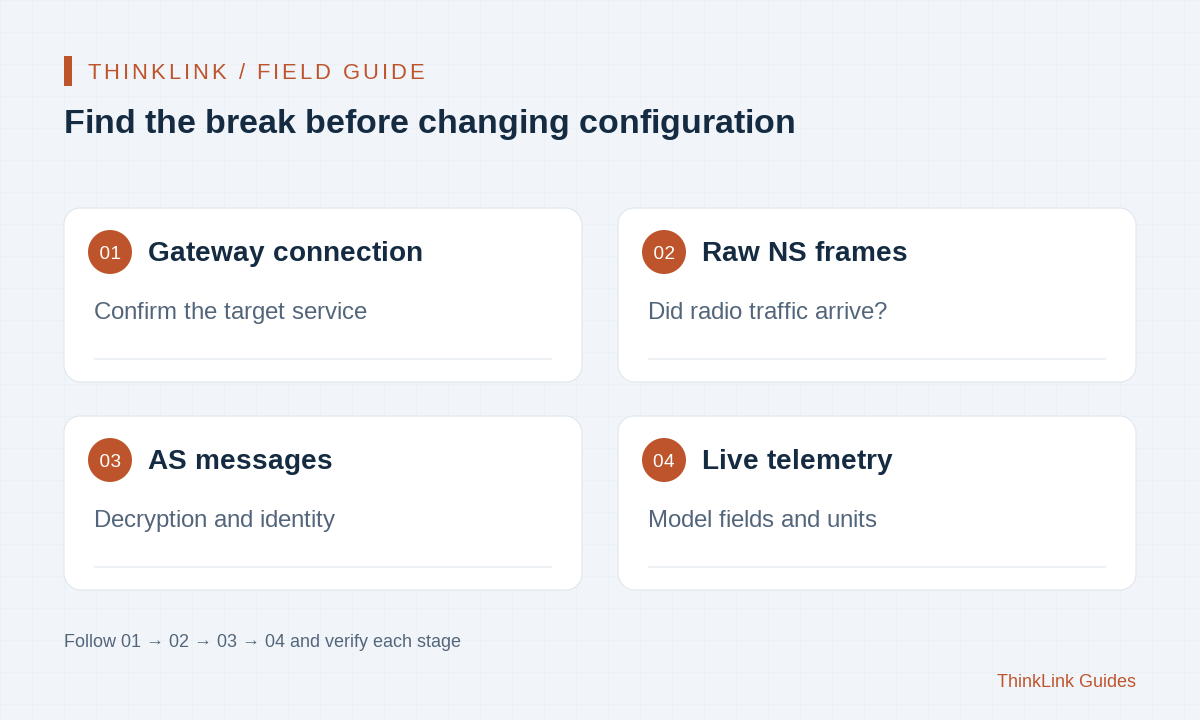
Read the guideDistinguish gateway status, raw NS frames, decrypted AS messages and thing-model telemetry to locate problems with your first LoRaWAN device.
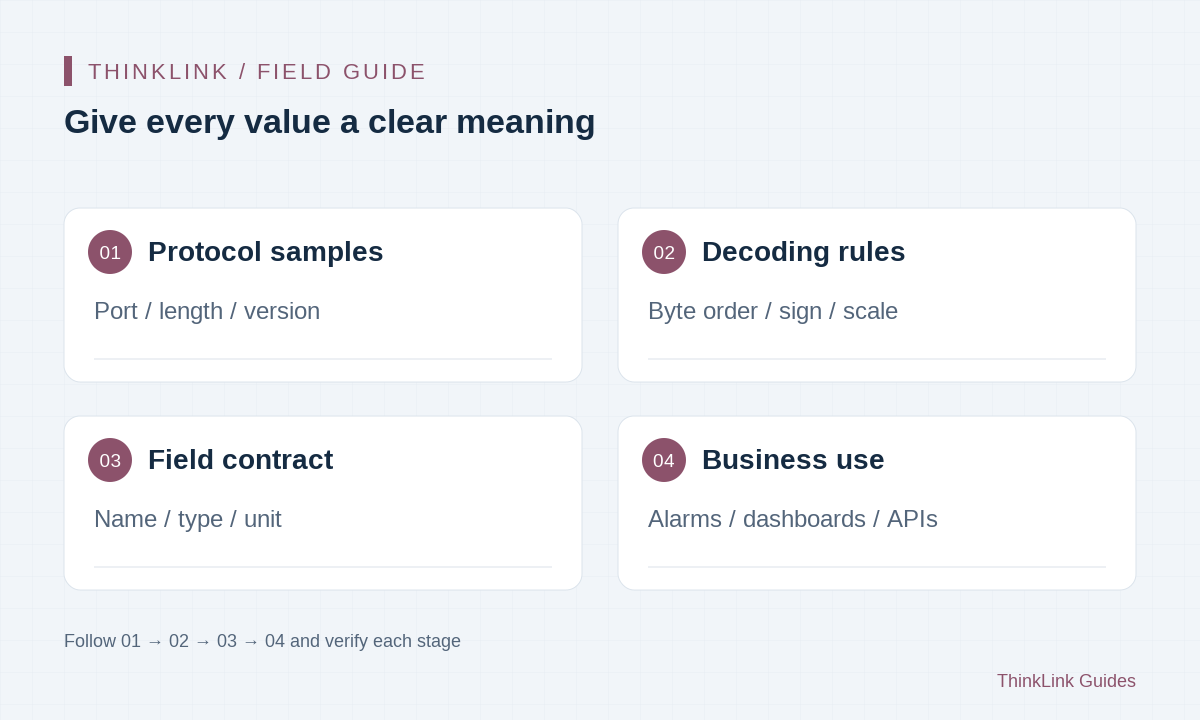
Read the guideGo beyond decoding with field contracts, unit checks, boundary samples and version regression tests for alarms, dashboards and integrations.
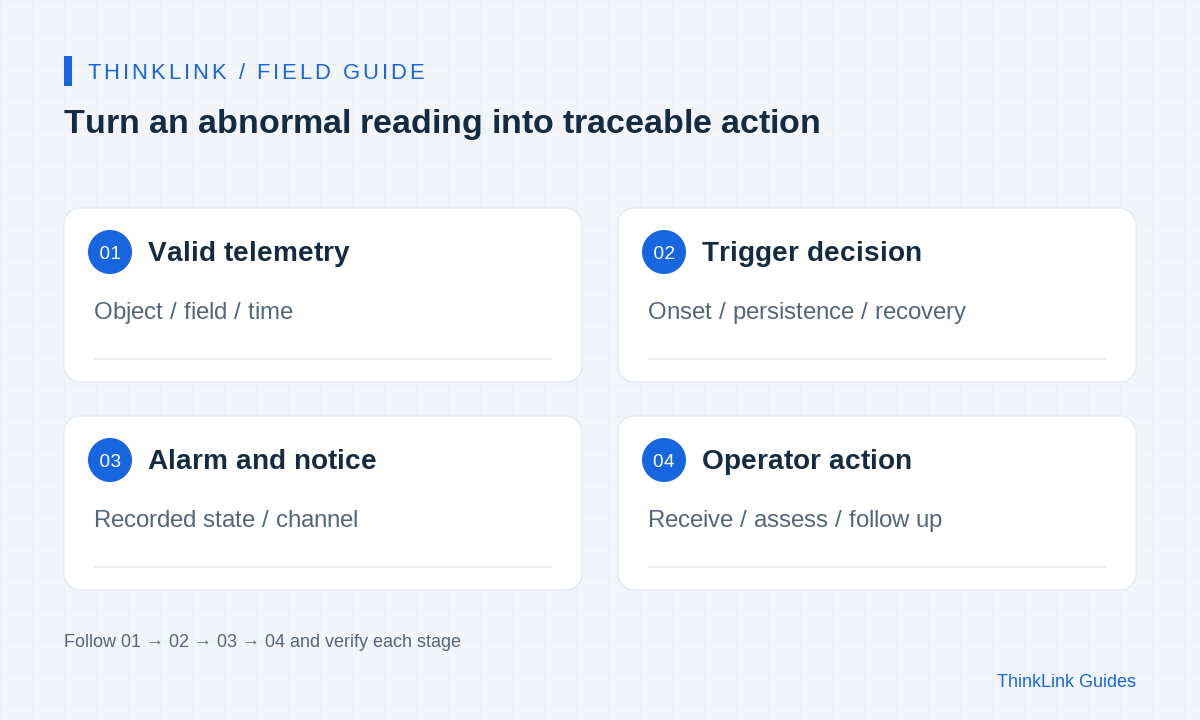
Read the guideDefine triggering, recovery, repeat reminders and ownership, and distinguish model execution, platform records and actual notification delivery.
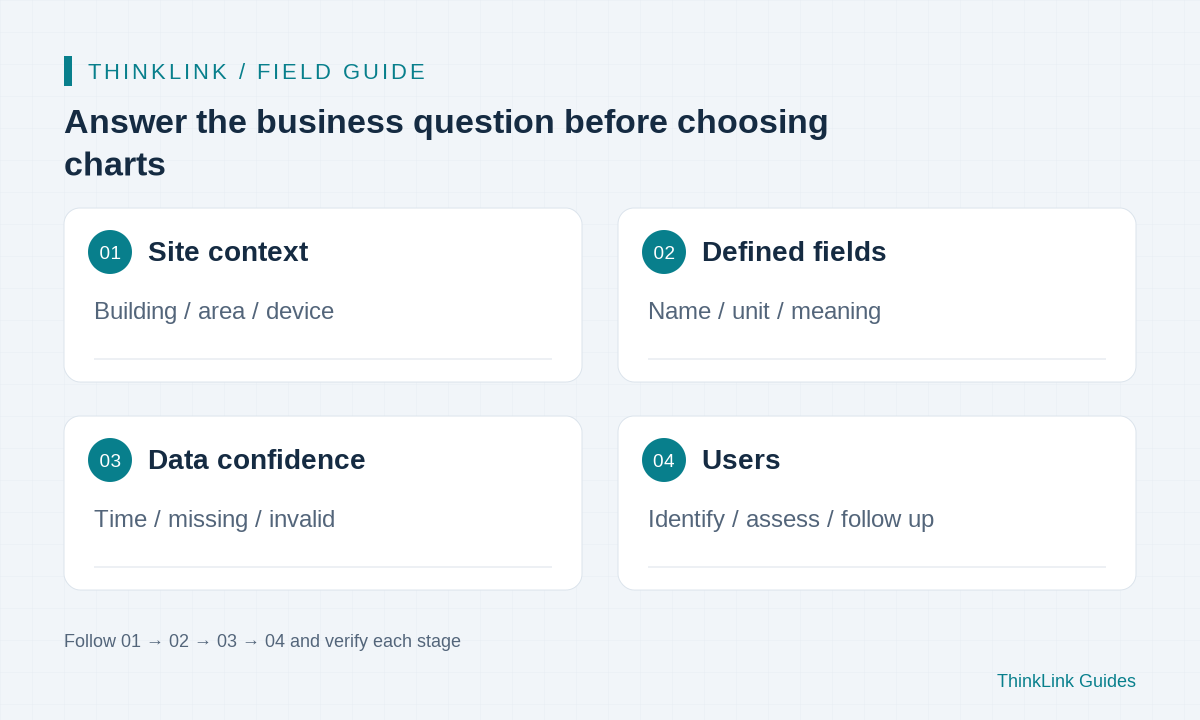
Read the guideStart with operators' tasks, organize locations and fields, choose simple or advanced dashboards, and verify timestamps, units and abnormal states.
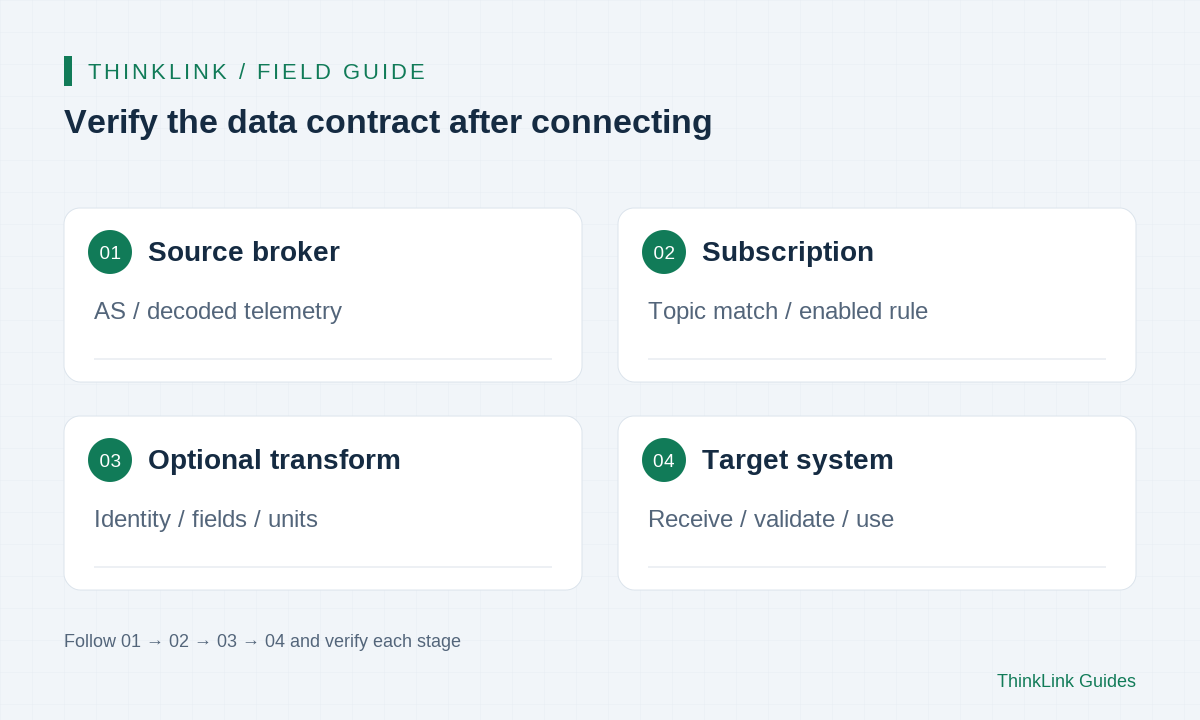
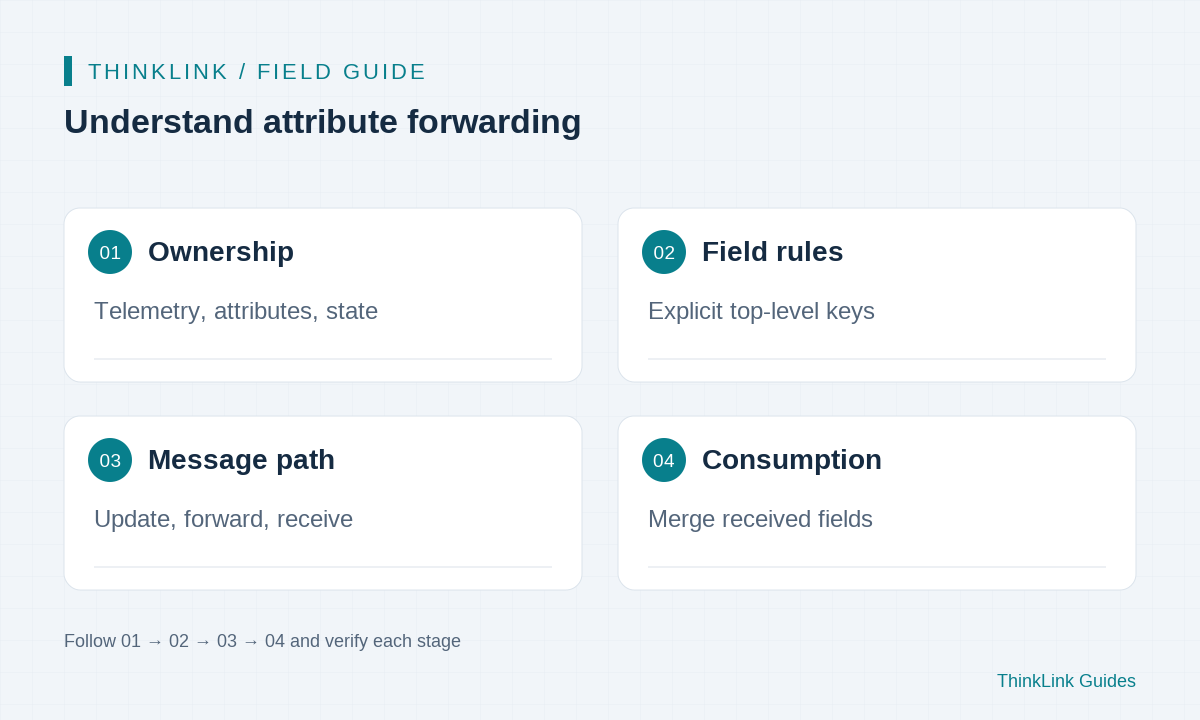
Read the guideConnect external systems through brokers and forwarders, distinguish AS payloads from decoded telemetry, and verify connections, subscriptions, transformations and receipt.
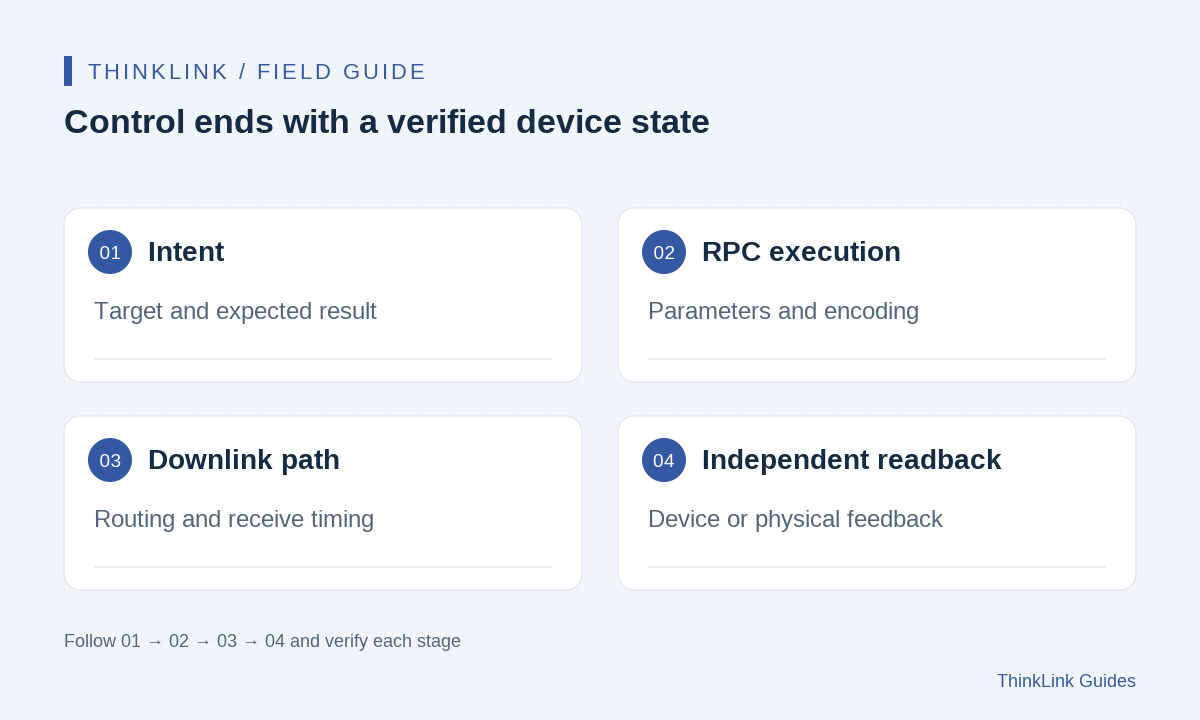
Read the guideBuild an evidence chain from intent and RPC parameters to downlink records and independent readback, without confusing UI success with physical action.
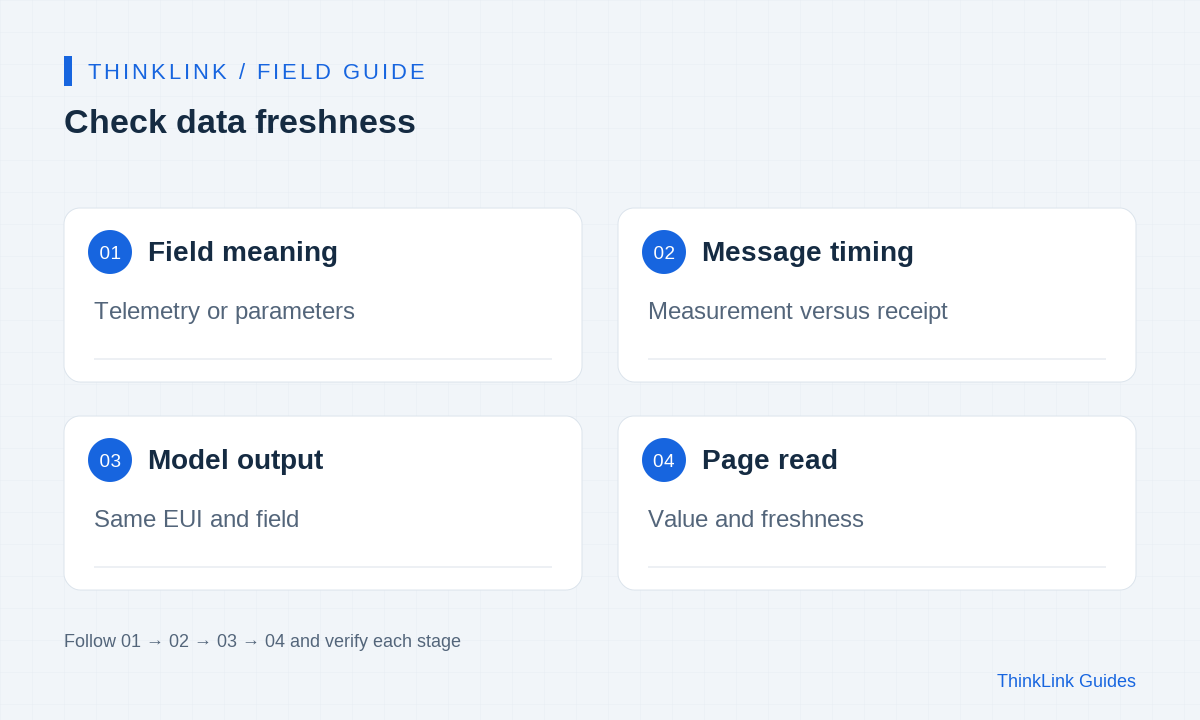
Read the guideTrace an unchanged value through field semantics, message timing, model output and page reads before treating it as the current device state.
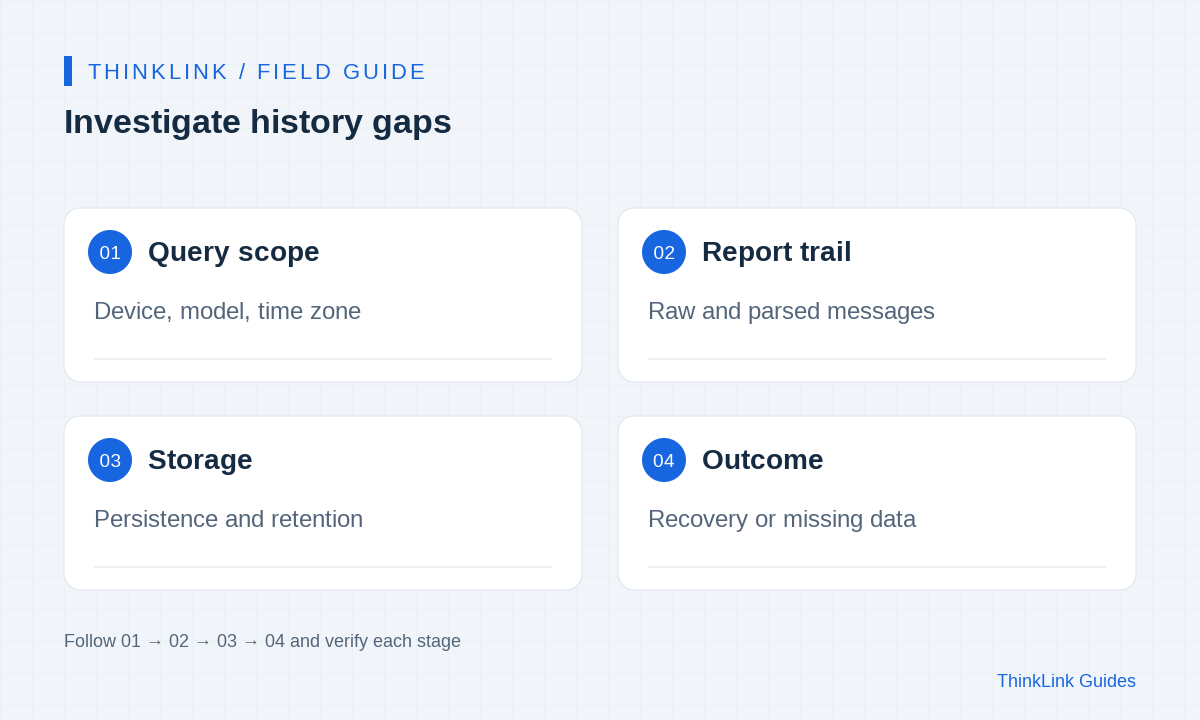
Read the guideCompare raw reports, parsed values and historical storage for one device, model and interval before interpreting missing chart points.
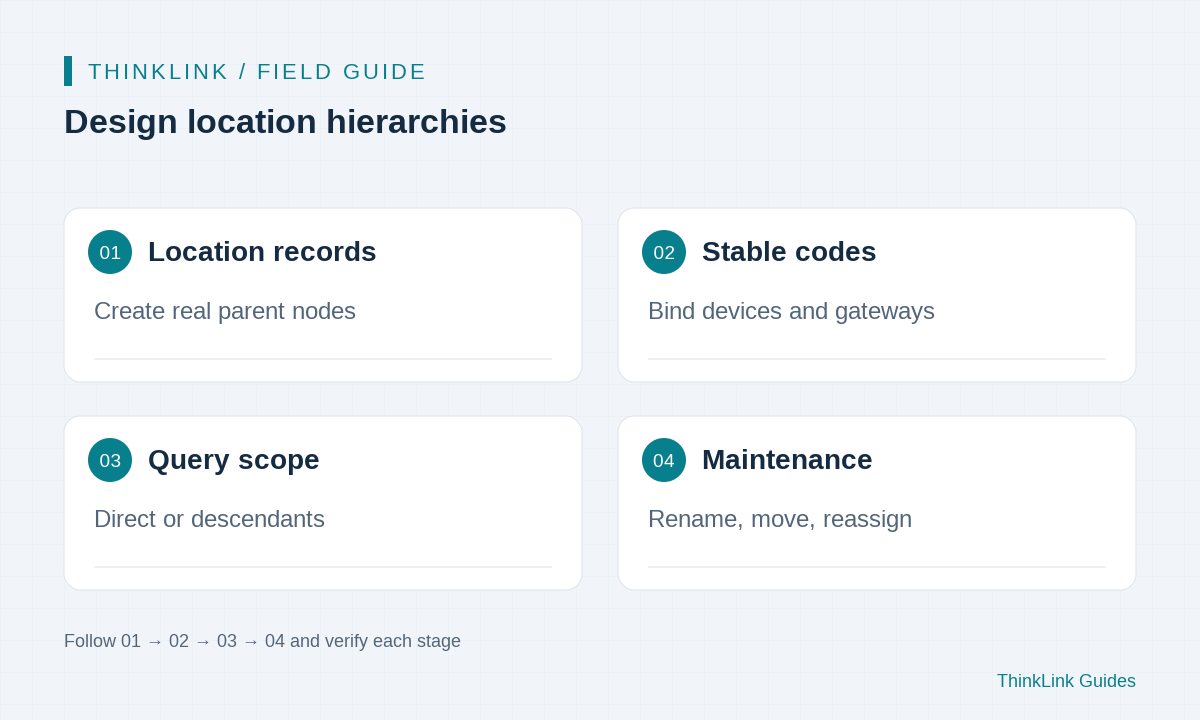
Read the guideUse stable codes, explicit paths and the correct query scope to manage buildings, floors, imports and location moves.
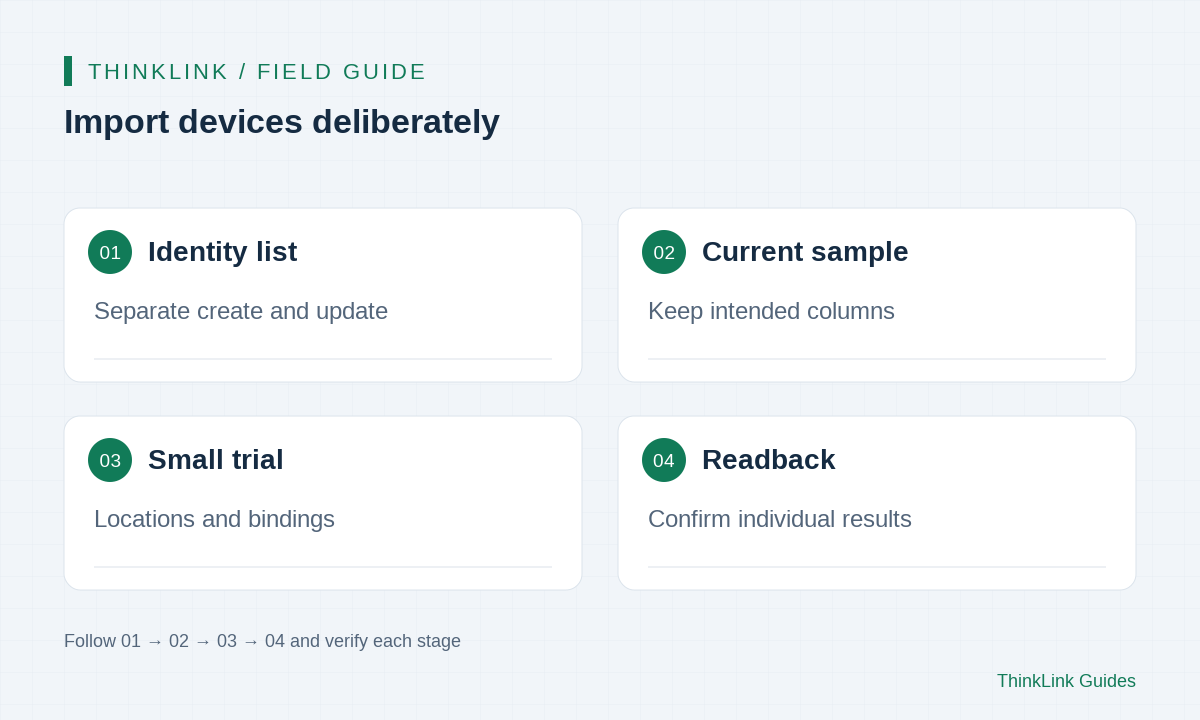
Read the guideSeparate creation from updates, check location codes and templates, and verify a small batch before changing a larger device population.
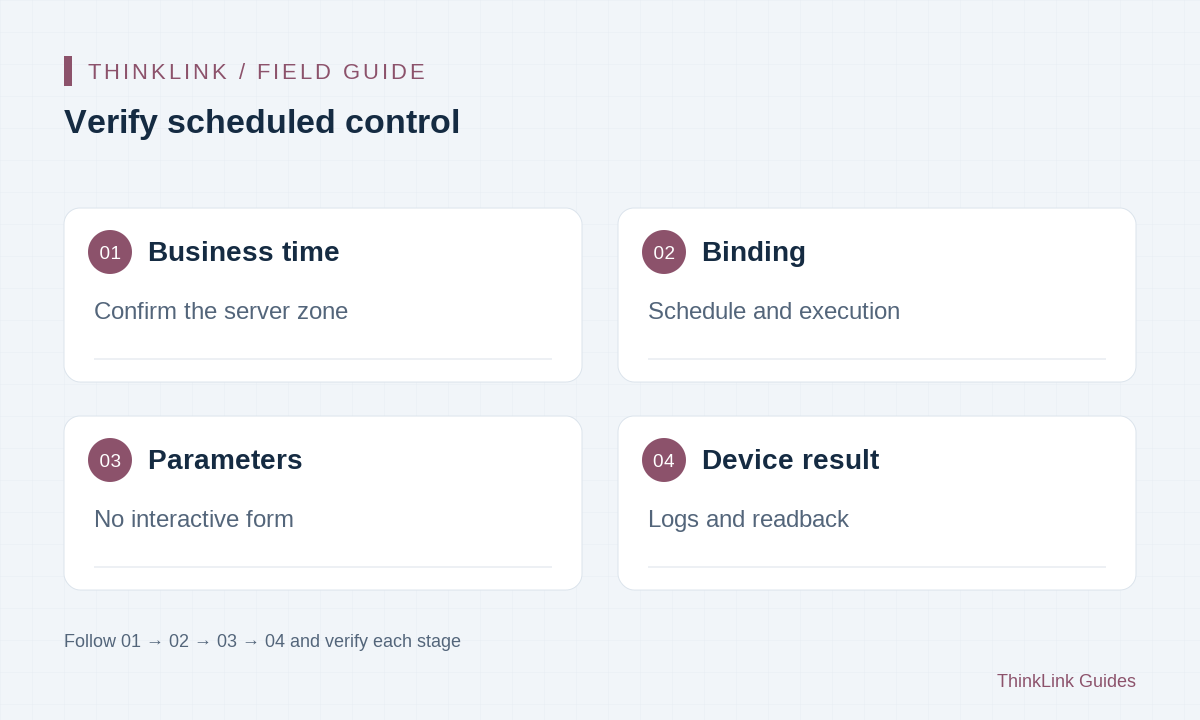
Read the guideCheck the schedule, device execution, RPC parameters and device feedback separately, including a real scheduled trigger.
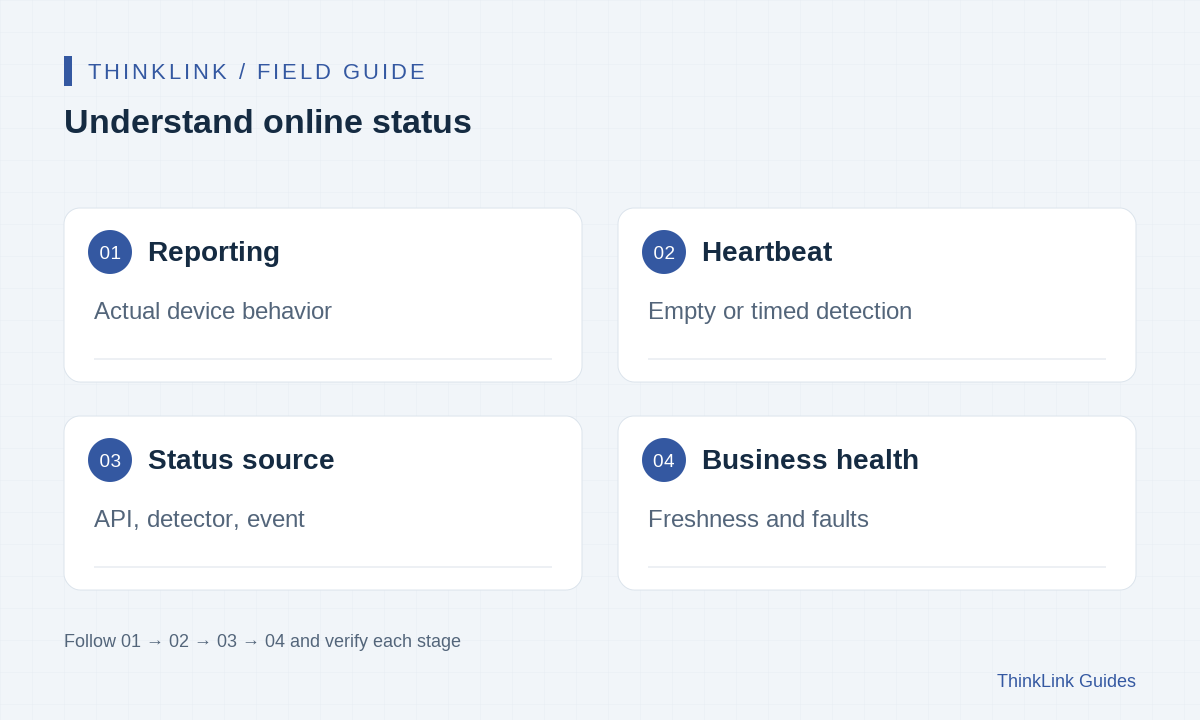
Read the guideDistinguish API online, detector _online and MQTT status events, including empty heartbeats and disabled detection.
Read the guideLocate telemetry, business attributes, process state and application parameters before checking field allowlists and partial messages.
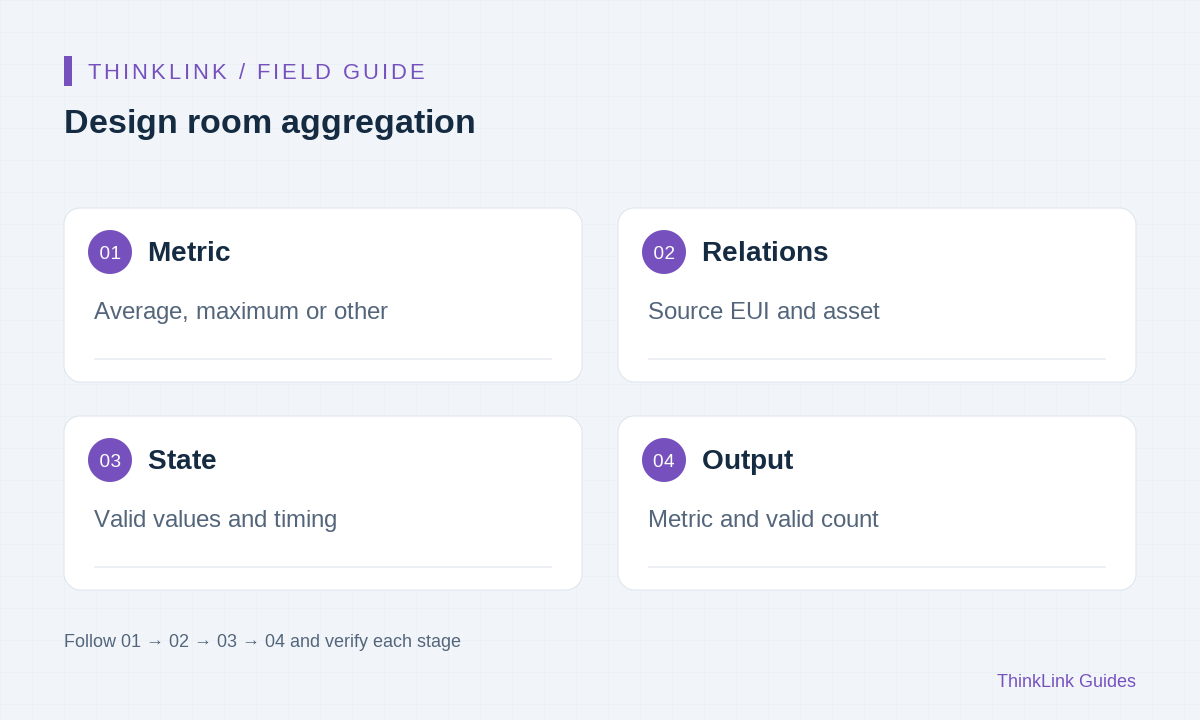
Read the guideUse virtual assets and relations while defining members, calculation semantics and stale-data handling so an average does not hide missing inputs.
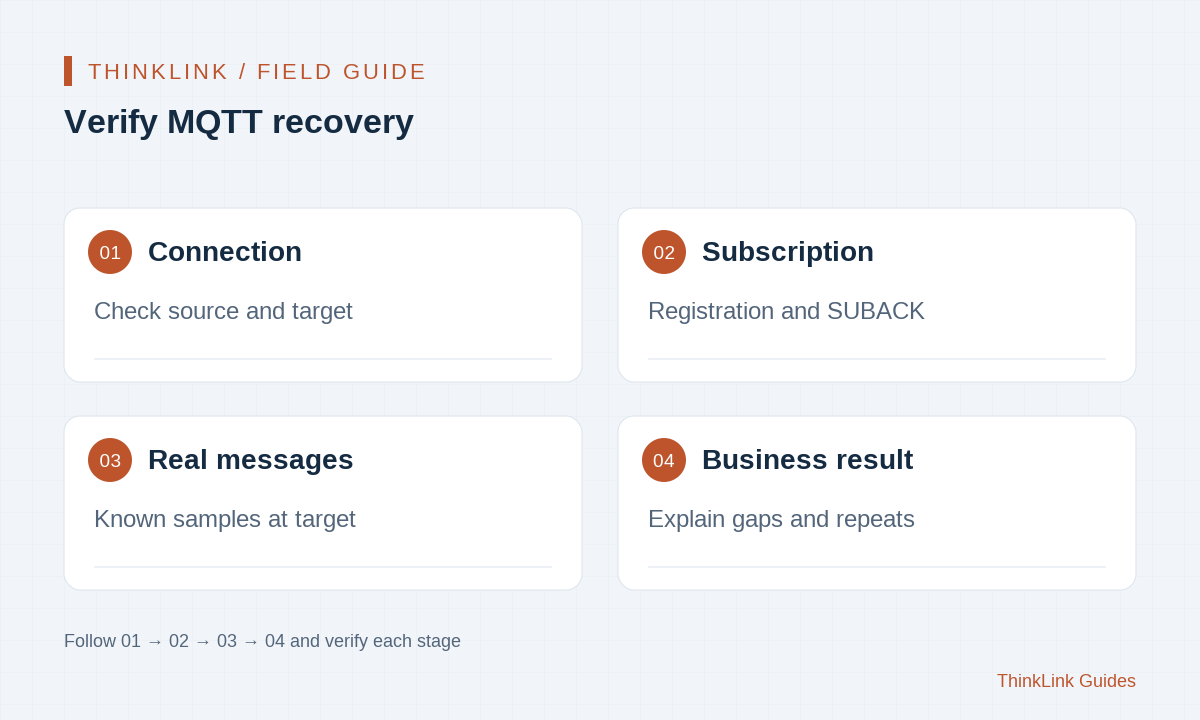
Read the guideGo beyond basic connection setup by testing source subscriptions, target availability and real consumer outcomes after interruptions.
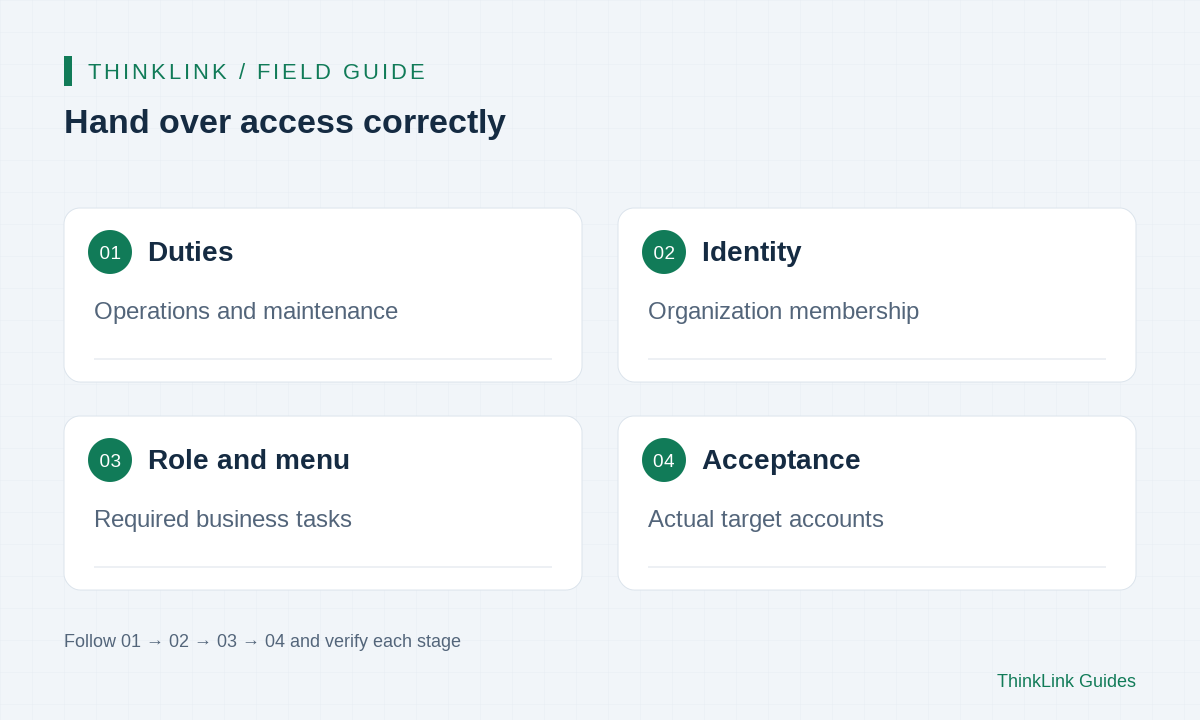
Read the guideDesign accounts and menu permissions around operational duties, test with the intended users and document personnel and credential changes.
Read the guide