Installed devices stay offline
Field equipment relies on wired interfaces such as RS-485 and M-Bus. Replacing every meter or rebuilding communications is slow and expensive.
Run collection on low-power MCUs and DTUs, process multiple field queries into efficient LoRaWAN uplinks, and keep logic, parameters and business programs adaptable as site requirements change.
Buildings, campuses, utilities, energy sites and factories already contain large fleets of working wired devices. Scaling their connection means solving interfaces and protocols while controlling radio traffic, power and the delivery cost of continuous change.
Field equipment relies on wired interfaces such as RS-485 and M-Bus. Replacing every meter or rebuilding communications is slow and expensive.
Forwarding every read directly creates many small messages. As device counts grow, they consume LoRaWAN airtime and system capacity.
Addresses, periods, thresholds and protocol logic continue changing after delivery, making repeated site visits impossible to scale.
Water · power · heat · industrial meters
RS-485 · M-Bus · sensor power
Multi-query · aggregate · COV
Low-power · fewer messages · wide-area
Sub-devices · models · RPC · applications
EdgeBus combines protocol collection, on-device processing, dynamic configuration and collector hardware to address capacity, power, continuous change and installed-base conversion.
Run multiple queries on the local field bus, then validate, parse, scale and combine their responses into one LoRaWAN uplink payload.
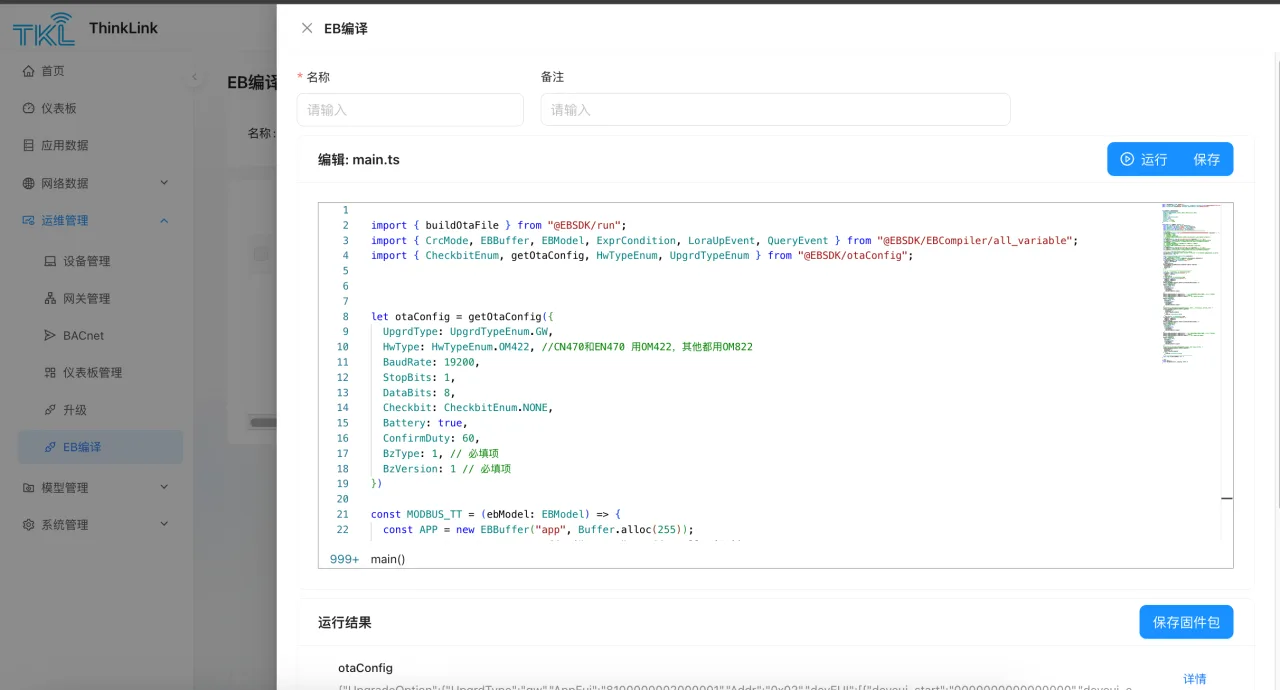
When protocols, data layouts or site requirements change, use code, runtime parameters and remote updates at the right layer instead of turning every adjustment into a field reflash.
EdgeBus can read a field sensor frequently while COV compares the latest value with the previous uplink snapshot and transmits only after the configured threshold is crossed.
Collectors with external-device power can wake and supply a wired sensor during a read. KC21, for example, provides a 15V output for installed RS-485 sensors.
EdgeBus organizes queries, processing and uplinks as configurable events. Developers describe device protocols with TypeScript, EBSDK or EBHelper, then run the compiled business program directly on a low-power collector.
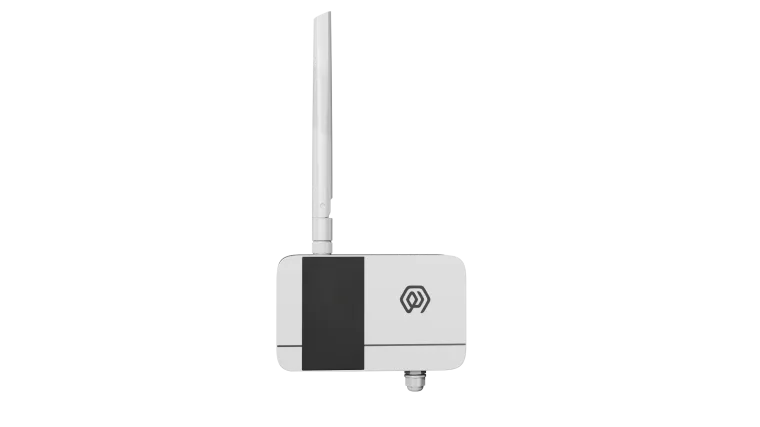
Focused on field protocols, lightweight processing and LoRaWAN uplinks without requiring Linux, containers or a full edge server.
Runs local databases, dashboards, BACnet, Modbus TCP Server and the complete ThinkLink platform capability set.
The KC family covers DIN-rail and IP65 installation, RS-485 and M-Bus interfaces, and runs the same continuously updateable EdgeBus collection logic.
Built for switch rooms, equipment rooms and control cabinets, connecting devices on an RS-485 bus to LoRaWAN.
Built for pits, utility corridors and sites without mains power. It can supply 15V to an external sensor during collection and reuse installed RS-485 equipment.
Provides a low-power LoRaWAN collection path for M-Bus heat and water meters in outdoor or unpowered locations.
Start with one device protocol and build a collection path you can maintain over time.